
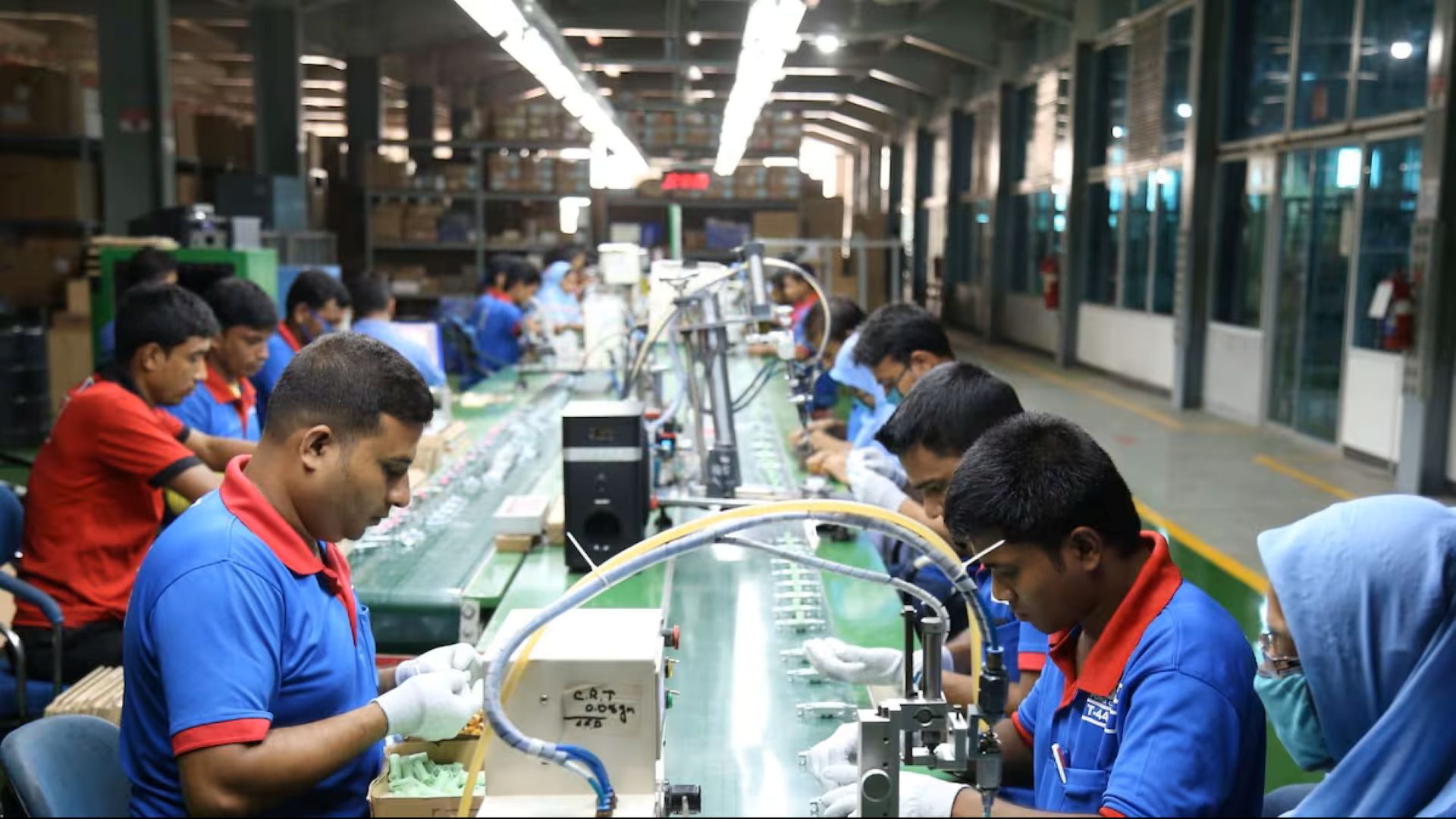
Indian Manufacturing is turning a new leaf with a focus shifting to blending creativity with sustainably efficient technologies.
Manufacturing in India has undergone significant changes in the last few decades. The changes that revolved around men, methods, and competition have now shifted to better ideas, the use of the latest technology, and eco-friendly way of thinking. Notably, the domain of digital textile printing has become a symbol of how Indian manufacturing is rapidly changing the global market. It’s the sector that has demonstrated its transition distinctly with no parallel in the production category, boasting an unprecedented evolution in ideas, technology, and sustainability.
Creativity as a Core Manufacturing Asset
Generally, manufacturing has been linked with standardisation. However, the reality is that consumers-within fashion, home décor, sportswear, and lifestyle segments-want personalisation, rapid design cycles, and products to which they can attribute the latest aesthetic trends. Digital textile printing has thus become a formidable link between artistic innovation and industrial implementation.
By the digital route, designers can create complex patterns, super-detailed motifs, gradient blends, and photorealistic effects that were either not feasible or too expensive by rotary or screen printing. As digital technology eliminates the need for screens and long setup times, even one meter of a unique design can be printed at a reasonable price. Such freedom invigorates a creative community where the artisan mode of thinking coexists without problems with the contemporary production environments.
Indian manufacturers, particularly those that have adopted the digital way of working, are turning this change to their advantage. They can partner internationally, produce in batches, and even offer mass customisation. The best part? All these things can be accomplished while cutting the design-to-shelf time from weeks to days – this shift in manufacturing from producing fabrics to empowering creativity at scale is really commendable.
Technological Advancement: Speed, Precision, and Flexibility
Manufacturing in India is undergoing a significant transformation. Take digital textile printing, for instance. The technology has revolutionised the textile industry by bringing precision, automation, and efficiency to the sector. New-age digital textile printers are now enabling printing that is highly controlled, reliable, and repeatable. These technologies ensure:
- High-resolution output with sharper lines and richer detailing
- Colour reproduction that is consistent from batch to batch
- Very little wastage due to the minimum use of ink by exact placement
- Quick production, enabling manufacturers to sync production with real-time demand
The most valuable attribute of digital printing is its flexibility, allowing manufacturers to stay agile, reduce dead stock, and react quickly to feedback. The transition is further made possible by India’s increasing talent pool in the fields of automation, printing technology, and colour science. This is how the distance between design ideation and production execution keeps getting smaller as digital devices get smarter and more integrated.
Sustainability: Global Need for Overall Competitiveness
Even as creativity and technology continue to be the main drivers of innovation, the manufacturing sector in India is increasingly being identified with sustainability. The buyers from Europe, the USA, and global retail chains value sustainability and prefer transparent supply chains with low carbon footprints. Digital textile printing is one of the ways by which these requirements are being met substantially. With significantly less resource consumption, digital textile printing can exceed the output of traditional processes. Water usage is almost zero in digital printing, and fewer mechanical steps consume less electricity.
Moreover, digital workflows are also paving the way for on-demand production, which is very important in the reduction of textile waste that has become a major environmental concern all over the world. The practice of producing only what is necessary diminishes the buildup of inventories, completely does away with overproduction, and lets brands perform testing of their designs before going large, thereby cutting down on the unsold stock.
Conclusion: Road Ahead
The expansion of digital textile printing is just one visible example of a significant change in India’s manufacturing culture. Manufacturing firms in India are going through a major culture change – not only are they becoming leaner, smarter and more responsive, they are also changing their old hierarchical models of management by embracing the data, automation, and design thinking. India’s next-generation manufacturing is emerging as a vibrant, eco-friendly, and efficient ecosystem. It is as much a mix of creativity as it is of technology. The focus is equally sharp on the planet without making any trade-offs with productivity. Digital textile printing is an indelible part of this change, representing how India is going about manufacturing in a different way.
 Article By: Satish Panchani, CEO & Co-founder of True Colors Limited.
Satish Panchani is the CEO and Co-founder of True Colors Limited, a dynamic company dedicated to innovation, sustainability, and excellence in the paints and coatings industry. With a visionary approach and over a decade of leadership experience, Satish has been instrumental in driving the company’s growth, fostering a culture of creativity, and delivering premium-quality products that inspire confidence and trust.