
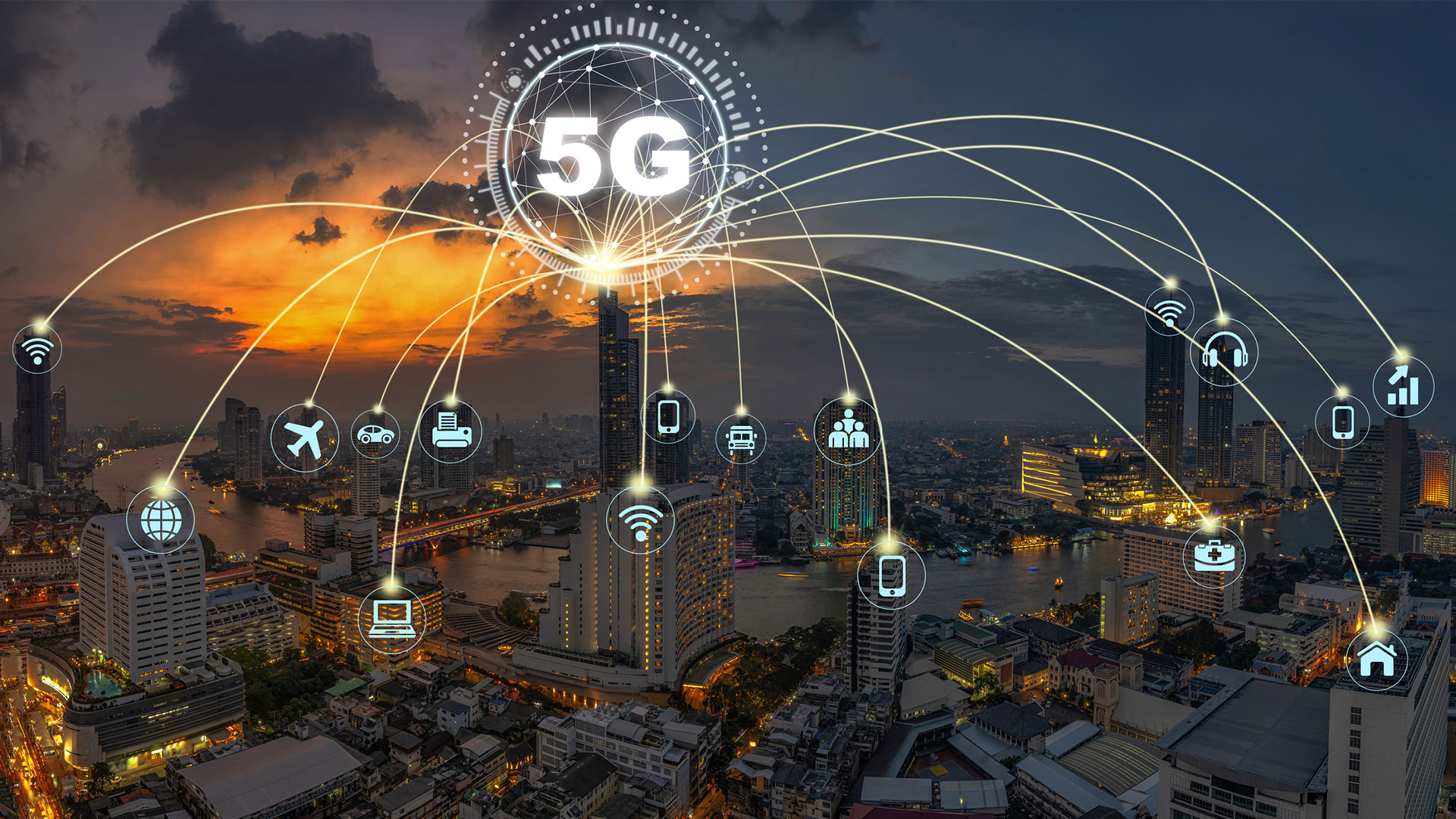
India’s digital landscape is entering a new phase. The arrival of 5G has created a significant opportunity to reshape how people live, work and connect across both urban and semi urban regions. Yet the true story of 5G is not just about new radio technology. It is about the deep digital infrastructure layer that supports it which includes fiber, densification, indoor systems and edge computing. This foundation is now the decisive factor that determines whether 5G becomes a meaningful transformation or remains a partial upgrade.
In early 2025, global 5G connections crossed 2.4 billion and are projected to touch nearly 3 billion by the end of the year. This rapid growth reflects a fundamental shift in user behaviour. Data consumption continues to rise, latency sensitive applications are becoming mainstream and networks are expected to serve not only people but also billions of devices. India alone now consumes over 27 GB of data per user per month (TRAI), one of the highest globally, underscoring the need for robust back-end infrastructure. For India, where urban centres are expanding and semi urban regions are becoming digitally active, building 5G ready infrastructure is essential for long term progress.
A New Foundation for Connectivity
Modern connectivity requires more than traditional telecom networks. A 5G ready ecosystem needs a converged layer of fiber, small cells, in building systems and edge capabilities that can support dense usage and high reliability. It must remain technology-agnostic and scalable, so that it can serve current needs while remaining adaptable to future standards.
Urban India has seen consistent growth in digital adoption. However, large parts of semi urban India still depend on networks that were built for earlier generations of technology. As services become more digital first, these regions require a strong and scalable framework that can support high speed broadband, cloud-based applications, digital payments and smart city services. 5G ready infrastructure provides exactly that foundation. Today, only about 35% of India’s telecom towers are fiberised, far below the 70–80% benchmark in advanced markets highlighting the scale of work required.
The Role of Shared and Neutral Infrastructure
A key learning from global deployments is that shared infrastructure unlocks faster rollouts and a more consistent user experience. When a single neutral network serves all operators, deployment becomes more efficient and coverage becomes more uniform. This approach eliminates duplication, reduces cost and accelerates connectivity in complex environments such as metros, tunnels, high density neighbourhoods and large campuses.
At Shaurrya Teleservices, we see neutral infrastructure as a public utility layer that supports every stakeholder. Whether it is fiber, small cells, in building systems or IoT connectivity, shared infrastructure ensures that every user receives the same level of service quality irrespective of the operator they use. It also allows cities and enterprises to plan digital systems more efficiently since the underlying network is already prepared for advanced applications.
For example, in a Tier-2 cluster in Telangana, deployment of a shared in-building system improved indoor 4G/5G data throughput by nearly 40% across three operators demonstrating how neutral infrastructure can deliver immediate, measurable impact without duplicating assets.
Benefits for Urban and Semi Urban Users
For users in both major cities and rapidly growing semi urban regions, 5G ready infrastructure creates a noticeable improvement in daily experiences. High speed internet becomes more reliable, video streaming becomes smoother and cloud services become more accessible. Smart devices inside homes and workplaces operate with greater stability. Enterprises can run connected operations, predictive maintenance and remote management tools with better responsiveness.
Semi urban users stand to gain significantly as well. A strong digital backbone enables better access to telemedicine, online education, e governance services and digital commerce. As more public services move online, reliable connectivity becomes essential for inclusion. With shared and future-ready infrastructure, semi-urban regions can achieve metro-grade digital quality crucial as semi-urban digital adoption is growing at nearly 20% year-on-year.
Enabling the Next Wave of Digital Innovation
The journey of 5G is only beginning. Emerging technologies like 5G Advanced, edge computing, private networks and large scale IoT systems will require even more dependable digital infrastructure. As Indian cities adopt intelligent traffic systems, connected utilities, automated surveillance and real time public transport monitoring, the underlying network must be designed for secure, low latency and high volume communication.
This is where long term planning becomes crucial. Infrastructure built today must serve not only current applications but also the next generation of devices and services. With an expected 5–6 billion IoT devices in India by 2030, and with India preparing for large digital public infrastructure initiatives, neutral and scalable networks will be essential for sustained growth.
A Collective Responsibility
The transition to 5G ready infrastructure requires collaboration between authorities, digital infrastructure providers and telecom operators. Planning for ducting, fiber routing and small cell deployment during civil construction saves time and cost. It also enables cities and semi urban areas to adopt smart services without revisiting physical works.
Policymakers are increasingly recognising that digital connectivity is a fundamental civic requirement. As India builds new smart cities and expands metro networks, early integration of digital infrastructure can prevent the connectivity gaps that many cities face today. States such as Maharashtra and Karnataka have already begun integrating common duct and fiber policies demonstrating the value of long-term digital planning.
The Road Ahead
5G ready infrastructure represents a shift in how India will deliver digital experiences in the future. It connects people, devices and services through a reliable backbone that supports growth and innovation. For urban and semi urban users, it unlocks access, opportunity and empowerment. The industry must collectively strengthen this backbone so that every region, whether urban or semi-urban, benefits equally from India’s accelerating digital future.
 This article has been authored by Salil Ahuja, Chief Strategy Officer, Shaurrya Teleservices.
Accomplished telecommunication strategist with 16+ years of experience spanning EMEA and India markets. Currently serving as Chief Strategy Officer at Shaurrya Teleservices, a Neutral Infrastructure Provider with IP-1 license and empanelled as a Digital Connectivity Rating Authority (DCRA).