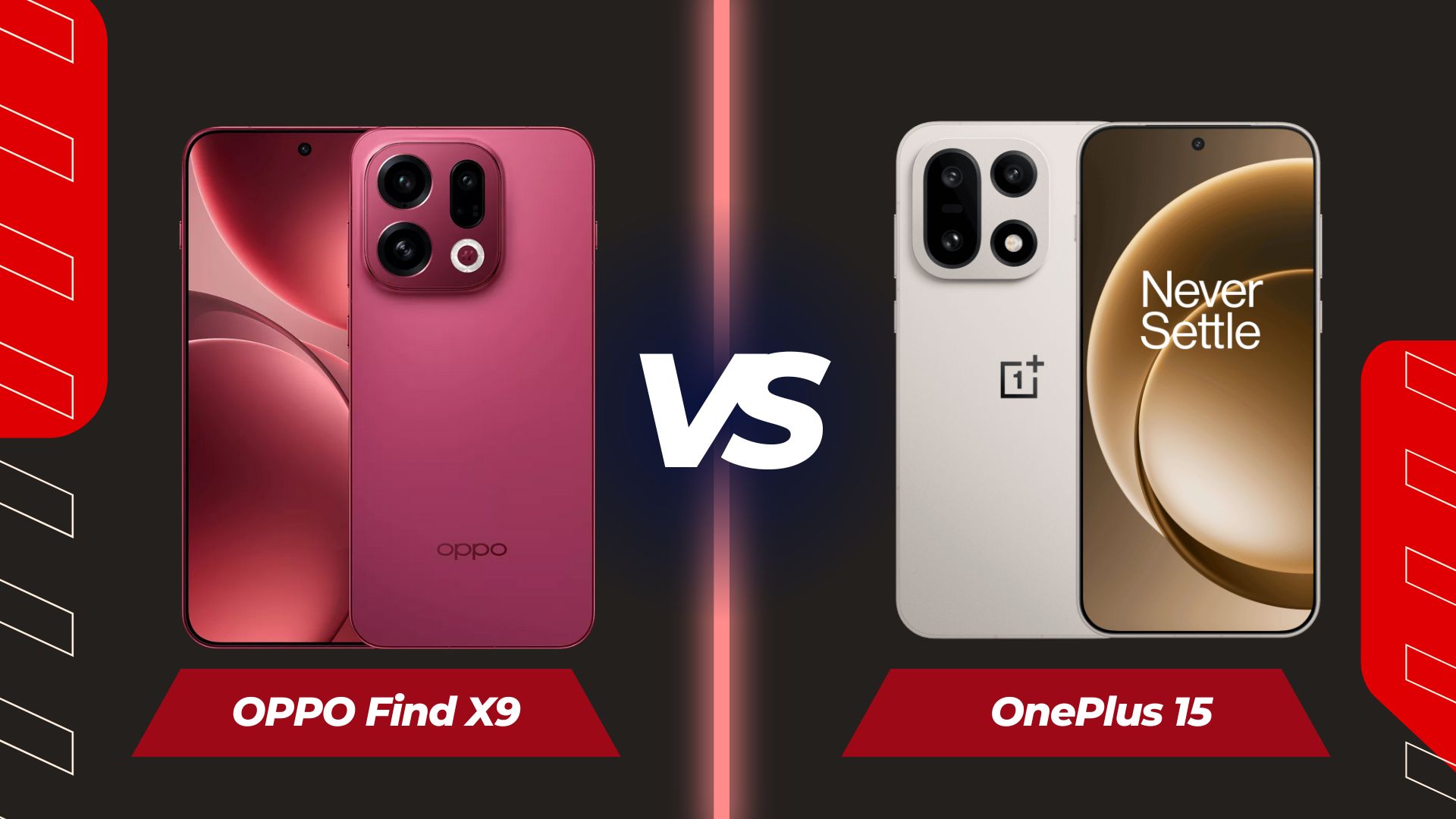

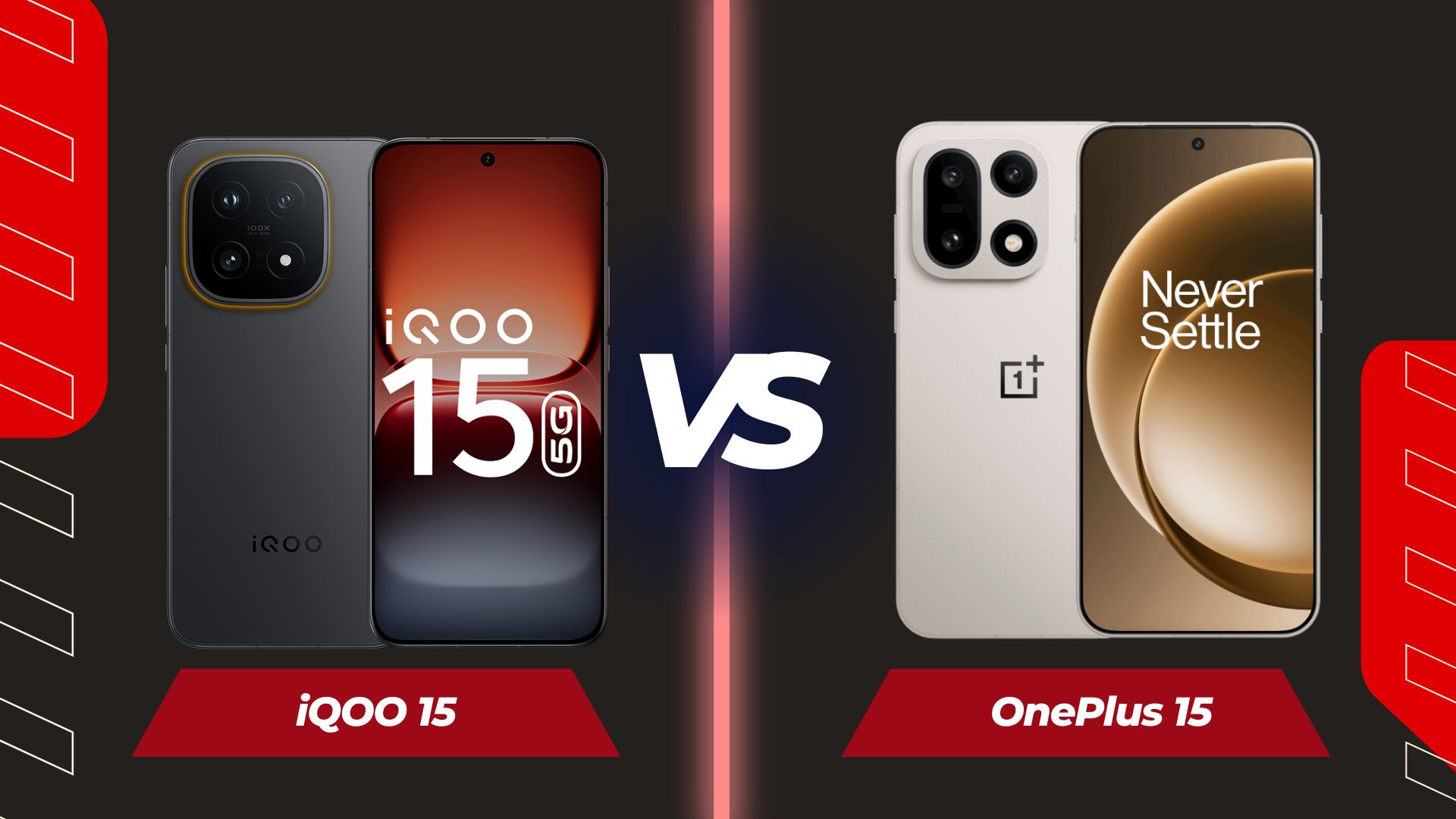
OnePlus’ premium flagship and iQOO’s newest entrant now go head-to-head in the Indian market. Both phones share the same core hardware but adopt slightly different philosophies — one leaning toward balanced display and battery efficiency, the other toward maximum performance and charging speed.
Key Takeaways
- The iQOO 15 starts at Rs 72,999 in India and runs on the Snapdragon 8 Elite Gen 5 chipset.
- It features a 7,000mAh battery, 144Hz 2K OLED display, and IP68/IP69 durability ratings.
- The OnePlus 15 offers a larger 7,300mAh battery, 165Hz refresh rate, and 50W wireless charging.
- Both phones share the same starting price, making the choice dependent on specific user needs like gaming or display quality.
iQOO introduced the iQOO 15 in the Indian market this week, positioning it as a direct competitor to the recently released OnePlus 15. Both flagship smartphones carry a starting price tag of Rs 72,999 and run on the powerful Snapdragon 8 Elite Gen 5 chipset. While the core specifications look nearly identical on paper, distinct differences exist in their display technology, battery size, and software approach. This report breaks down the features of both devices to help you decide which one offers better value for your money.
Design and Build Quality
The iQOO 15 keeps a focus on a distinct look with a square camera module on the top-left corner. It includes a “Monster Halo” light feature on the back that glows for calls, messages, and charging status. Users can change the colours and effects of this light. The phone has flat edges which often helps with grip during gaming sessions.
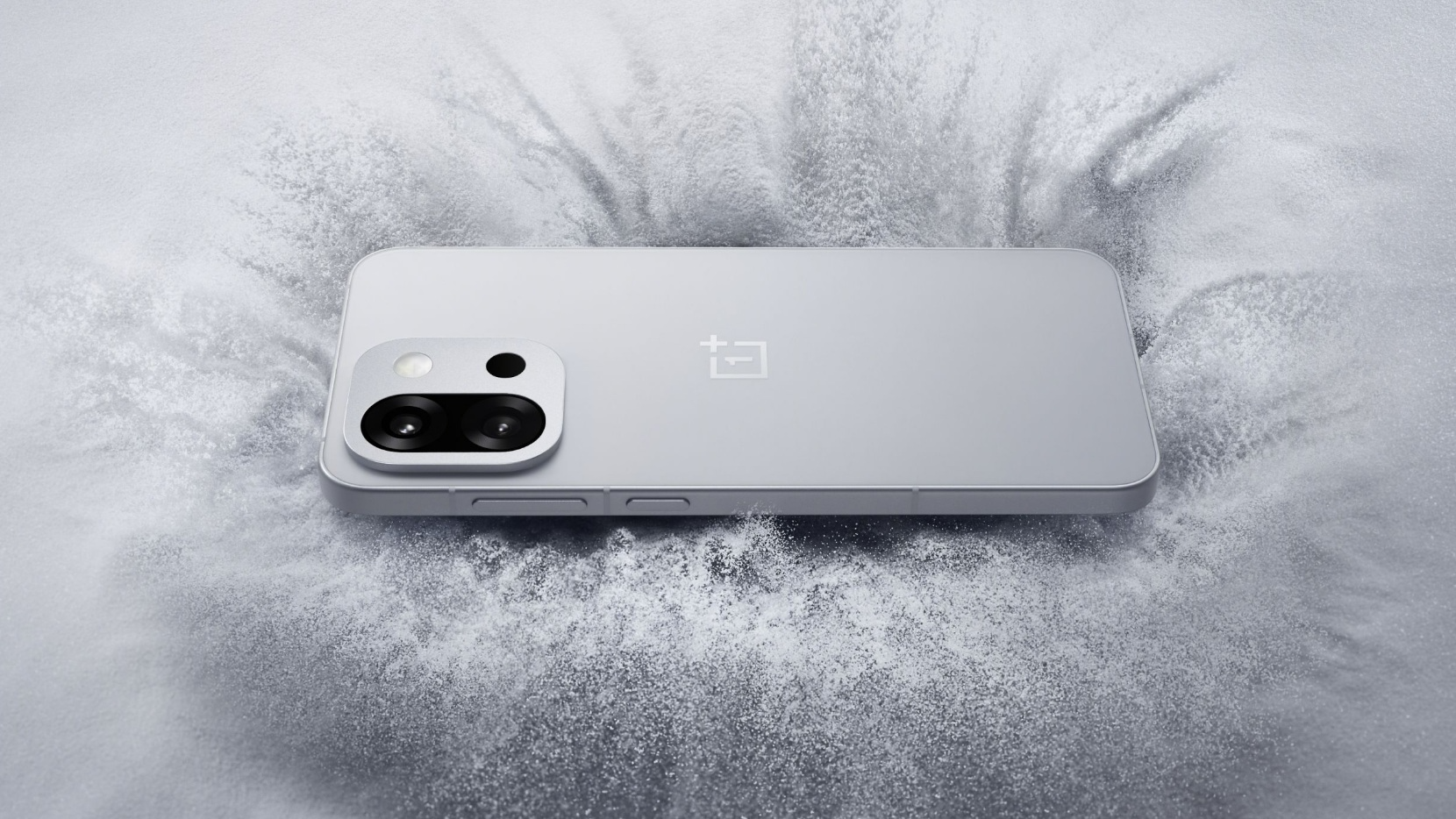
In contrast, the OnePlus 15 uses a simpler design with a smaller camera layout. It appeals to buyers who prefer a clean and understated look. The OnePlus 15 is slightly more compact due to its smaller screen size. For durability, the OnePlus 15 holds a strong advantage with an IP69K rating, meaning it can withstand high-pressure water jets and dust better than standard flagship phones.
Display and Visual Experience
Screen quality is a major difference between these two rivals. The iQOO 15 uses a 6.85-inch Samsung 2K M14 OLED panel. This screen delivers a peak brightness of 6,000 nits, which makes it very easy to read under direct sunlight. It supports a 144Hz refresh rate, offering smooth scrolling and fluid visuals for video content.
The OnePlus 15 fits a smaller 6.78-inch LTPO AMOLED display with a 1.5K resolution. While the resolution is lower than the iQOO, it supports a higher 165Hz refresh rate. This specific feature targets gamers who play titles that support high frame rates. The peak brightness hits 3,600 nits, which is bright enough for most users but lower than the iQOO 15.
Performance and Cooling
Both devices run on Qualcomm’s Snapdragon 8 Elite Gen 5, a chip built for heavy tasks. The iQOO 15 pairs this chip with a custom Q3 SuperComputing chip to improve game visuals. It also uses a large 8,000mm² cooling system to keep temperatures down during long play sessions.
The OnePlus 15 counters with its own set of gaming technologies, including a “Performance Tri-Chip” setup designed to manage frame rates and touch response. Benchmark tests show the OnePlus 15 scores slightly higher in raw performance numbers, though real-world speed feels similar on both phones.
Camera Performance
The camera systems take different approaches to image processing. The iQOO 15 carries a 50MP triple-camera setup with a dedicated 3x optical zoom lens. It tends to produce photos with boosted, vibrant colours that look ready for social media immediately. However, it sometimes over-sharpens details in selfie shots.
The OnePlus 15 also uses a 50MP triple-camera array but includes a 3.5x optical zoom lens, giving it a small edge for zooming in on distant objects. Reviews suggest the OnePlus camera captures more natural images and handles shutter speed well, making it easier to take quick photos of moving subjects.
Battery and Charging Speed
Battery life sees a big jump this year for both brands. The iQOO 15 holds a 7,000mAh battery, while the OnePlus 15 packs an even larger 7,300mAh unit. Both phones support 100W fast wired charging. Wireless charging differs slightly, with iQOO offering 40W speeds and OnePlus providing 50W speeds.
In daily use, both phones easily last over a day on a single charge. The OnePlus 15 might offer a few extra hours of use due to the larger capacity, but the difference is small for most users.
Software and Updates
The iQOO 15 runs on OriginOS 6, which replaces the older Funtouch OS. This new software offers fluid animations and many options to change the look of the interface. iQOO promises 5 years of Android OS updates and 7 years of security patches.
The OnePlus 15 ships with OxygenOS 16. This software focuses on AI tools like a “MindSpace” hub for organizing files and notes. OnePlus offers 4 years of OS updates and 6 years of security patches, which is slightly less support than iQOO provides.
Frequently Asked Questions (FAQs)
Q1: What is the price of iQOO 15 and OnePlus 15 in India?
A1: Both smartphones start at Rs 72,999 for the base model.
Q2: Which phone is better for gaming, iQOO 15 or OnePlus 15?
A2: The OnePlus 15 supports a higher 165Hz refresh rate which suits competitive gaming, while the iQOO 15 has a larger cooling system for sustained performance.
Q3: Do these phones come with a charger in the box?
A3: Yes, both iQOO and OnePlus typically include the 100W fast charger in the box for Indian units.
Q4: Is the iQOO 15 waterproof?
A4: The iQOO 15 has IP68 and IP69 ratings, making it resistant to dust and water submersion. The OnePlus 15 adds an IP69K rating for protection against high-pressure sprays.
Which phone has a better battery life? The OnePlus 15 has a slightly larger 7,300mAh battery compared to the 7,000mAh battery in the iQOO 15, giving it a small advantage in usage time.